
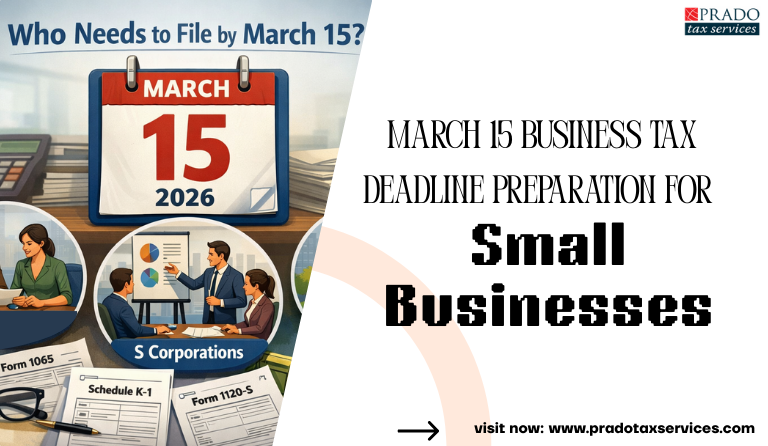
Tax season can be confusing for many businesses, especially when different deadlines apply depending on the type of business entity. While most people are familiar with the April 15 tax deadline for individual taxpayers, many business owners are surprised to learn that some companies must file much earlier. Missing the correct deadline can lead to penalties, delayed paperwork, and unnecessary stress.
For partnerships, S corporations, and certain LLCs, the key date to remember in 2026 is March 15. This deadline applies specifically to businesses that must submit pass-through tax returns, where income is reported to individual owners rather than taxed directly at the corporate level. Because these businesses must also distribute tax documents to partners or shareholders, filing earlier helps ensure everyone has the information they need for their personal returns.
Understanding the March 15 business tax deadline 2026 is essential for staying compliant and avoiding last-minute filing issues. Whether you run a small partnership, manage an S corporation, or are filing business taxes for an LLC for the first time, knowing which forms to prepare and when to submit them can make tax season far more manageable. In the sections ahead, we’ll break down which businesses must file by March 15, what forms are required, and how companies can prepare in advance for a smooth tax filing process.
A Quick Look at the March 15 Business Tax Deadline
The March 15 business tax deadline 2026 mainly applies to businesses that operate as pass-through entities. In these structures, the business itself generally does not pay income tax. Instead, profits and losses pass through to the owners, partners, or shareholders, who then report that income on their personal tax returns. Because these owners need the tax information early, the IRS requires certain businesses to file their returns by March 15.
Understanding the business tax filing deadline helps companies stay organized and avoid delays that can affect partners, investors, or shareholders who rely on accurate tax documentation. Filing on time also ensures that important forms, such as partnership tax returns and shareholder reports, are issued promptly.
Business Type | Tax Form | Filing Deadline |
Partnerships | Form 1065 | March 15 |
S Corporations | Form 1120-S | March 15 |
C Corporations | Form 1120 | April 15 |
Understanding state vs federal business tax deadlines is also important because different business structures may follow different filing schedules and compliance requirements depending on federal and state tax rules.
For partnerships and S corporations, filing by March 15 allows the business to distribute Schedule K-1 forms to partners or shareholders. These forms report each owner’s share of income, deductions, and credits so they can complete their personal tax filings accurately.
Businesses can always check important filing dates through the official IRS tax calendar for businesses and self-employed, which provides updated deadlines for various federal tax obligations throughout the year. Knowing these timelines early helps businesses maintain proper business tax compliance and avoid unnecessary penalties during tax season.
Who Actually Needs to File Business Taxes by March 15
Not every business is required to meet the March 15 business tax deadline 2026, but several common business structures must file by this date. These businesses operate as pass-through entities, meaning the profits and losses of the company pass directly to the owners instead of being taxed at the corporate level.
Because the owners must report this income on their personal tax returns, the IRS requires these businesses to file earlier in the tax season. Filing on time ensures that partners or shareholders receive the necessary tax documents, such as Schedule K-1, before preparing their individual returns.
Businesses that must file business taxes by March 15 typically include:
- Partnerships that report income using Form 1065
- S Corporations that file using Form 1120-S
- Multi-member LLCs that are taxed as partnerships
- Certain investment partnerships or joint ventures that distribute income to multiple partners
For many small companies, understanding whether they fall into one of these categories is essential for proper small business tax filing. Missing the March deadline can delay partner filings and may result in IRS penalties for late business tax filing.
If your business operates as a partnership or S corporation, it’s important to begin organizing financial records early so the necessary forms can be completed and submitted before the deadline. In the next section, we’ll look at the key forms businesses must prepare before filing their tax returns.
Forms Businesses Must Prepare Before Filing
Before submitting a return by the March 15 business tax filing deadline, businesses need to prepare several important tax documents. These forms help report company income, deductions, and each owner’s share of profits. Preparing them early makes the overall business tax filing process smoother and reduces the risk of errors or delays.
Below are the most common forms partnerships and pass-through entities must organize before filing.
Form 1065 for Partnerships
Form 1065 is the primary partnership tax return used to report the income, deductions, gains, and losses of a partnership, and the IRS provides detailed filing instructions for Form 1065 to help businesses report partnership income correctly.
Unlike corporate tax returns, partnerships generally do not pay income tax at the entity level. Instead, they report financial activity through this form so the IRS can track how profits are distributed among partners.
Businesses must accurately report total income, operating expenses, and any deductions on this form. Preparing financial statements and accounting records ahead of time helps ensure the numbers reported on Form 1065 are correct.
Schedule K-1
Once the partnership tax return is completed, the business must generate Schedule K-1 for each partner. This document outlines each partner’s share of the company’s income, deductions, and credits.
Partners rely on the information in Schedule K-1 to report their individual tax obligations. If a business delays filing its partnership tax return, partners may receive their forms late, which can affect their personal tax filings as well.
Corporate Tax Return Differences
While partnerships use Form 1065, corporations have slightly different reporting requirements. For example, S corporations typically file Form 1120-S, while traditional corporations file Form 1120 as their corporate tax return.
Understanding these differences is essential for maintaining proper business tax compliance. Businesses should review the specific forms required for their entity structure and ensure that all supporting financial records are organized before submitting their return.
For detailed guidance on preparing a partnership tax return, businesses can review the official IRS Form 1065 resource, which explains filing requirements and reporting instructions.
How Small Businesses Prepare for Tax Filing
Preparing early is one of the best ways to avoid stress during tax season. Many small businesses wait until the last minute to organize their records, which can make filing small business taxes more difficult. Taking a structured approach helps ensure financial information is accurate and ready before the deadline. Many businesses also rely on online tax filing services that help maximize tax refunds when preparing their business tax filing documents.
Here are some practical steps companies can follow when preparing business tax filing documents.
- Prepare Financial Statements
Start by organizing essential financial records such as profit and loss statements, balance sheets, and bank reconciliations. These documents help summarize the company’s financial activity and provide the foundation for accurate tax reporting. - Review Deductible Expenses
Businesses should carefully review all eligible deductions, including operating costs, office expenses, travel, software subscriptions, and equipment purchases. Identifying legitimate deductions helps reduce taxable income and improves overall business tax compliance. - Confirm Employee Payroll Records
If the business has employees or contractors, it is important to verify payroll records and ensure all payroll tax filings have been completed correctly. Accurate payroll reporting is a critical step before submitting IRS tax filing documents. - Prepare IRS Tax Filing Documents
Depending on the business structure, companies may need to complete forms such as Form 1065 or Form 1120-S. Gathering all supporting financial documents in advance ensures these forms can be completed without delays. - Consult a Business Tax Preparer
Many small business owners choose to work with experienced professionals when learning how to file business taxes. A qualified tax preparer can review financial records, identify potential deductions, and ensure that all required forms are submitted before the deadline.
Taking these steps early helps businesses stay organized, reduce filing errors, and meet important tax deadlines with confidence. In the next section, we’ll look specifically at what new business owners should know when filing business taxes for an LLC for the first time.
Filing Business Taxes for LLC for the First Time
For many new entrepreneurs, filing business taxes for LLC for the first time can feel confusing. Unlike other business structures, an LLC does not always have a single tax classification. The way the business files taxes depends on how it is structured and how many members it has.
For example, a single-member LLC is usually treated as a sole proprietorship for tax purposes, meaning the owner reports the income on their personal tax return. However, a multi-member LLC is typically taxed as a partnership, which means the business must submit a partnership tax return and provide tax documents to each member.
If you are learning how to file taxes for LLC, understanding your tax classification is the first step. This determines which forms you need to prepare and which business tax filing deadline applies to your company.
First-Time LLC Tax Filing Checklist
If you’re filing business taxes for LLC for the first time, make sure to:
- Understand your tax classification (sole proprietorship, partnership, or S-corp election)
- Gather all income and expense records from the tax year
- Organize receipts and deductible expenses for accurate reporting
- Prepare partnership tax return documents if the LLC has multiple members
- File before the business tax filing deadline to avoid penalties
Taking the time to organize financial records and understand filing requirements early can make the first tax season much easier. Many new business owners also work with professionals who specialize in small business tax filing to ensure everything is submitted correctly.
In the next section, we’ll discuss what happens if a business misses the March 15 deadline and the potential consequences companies should be aware of.
What Happens If a Business Misses the Deadline
Missing the March 15 business tax deadline 2026 can create several problems for partnerships and S corporations. While the IRS does allow extensions, failing to file on time without taking the proper steps may result in penalties and administrative issues that affect both the business and its owners.
One of the most immediate consequences is IRS late filing penalties. Partnerships and S corporations may face financial penalties for each month the return is late. These penalties are often calculated per partner or shareholder, which means the total cost can increase quickly for businesses with multiple partners.
Another common issue is the delay in distributing Schedule K-1 forms. Partners and shareholders rely on these forms to complete their personal tax returns. When a business files late, it can delay individual filings and create complications for everyone involved.
Businesses may also experience broader tax compliance issues if deadlines are repeatedly missed. Consistent late filings can increase the chances of IRS notices, audits, or additional scrutiny of financial records.
To avoid these complications, businesses should prepare their documents early or request an extension if more time is needed. The Small Business Administration tax guide for businesses explains how companies can stay compliant with federal tax responsibilities and understand different business tax filing requirements.
Businesses in the Bay Area Often Face These Tax Filing Challenges
Businesses across the Bay Area often deal with unique challenges when preparing their tax returns. From managing multiple income sources to keeping up with changing tax regulations, many companies find that business tax filing becomes more complicated as their operations grow. This is especially true for small businesses and partnerships that must prepare accurate documentation before the March 15 deadline.
One common challenge is organizing financial records throughout the year. Many businesses wait until tax season to review expenses, income statements, and payroll records. Without proper bookkeeping, preparing documents such as partnership tax returns or Schedule K-1 forms can become time-consuming.
Another issue is understanding the different filing requirements based on business structure. Partnerships, S corporations, and LLCs all follow different reporting rules, which can make small business tax filing confusing for business owners who are managing multiple responsibilities.
This is why many businesses look for reliable support when handling tax filing in the Bay Area. Working with experienced professionals who provide business tax services in San Leandro and San Francisco tax preparation helps ensure returns are prepared accurately and submitted before important deadlines.
Businesses looking for reliable support often explore services such as personal tax services and business tax services, which help manage everything from documentation to final filing. Professional tax preparation services, tax filing services, and experienced tax consultants can also help businesses stay compliant while identifying deductions and opportunities to improve overall tax efficiency.
Common Mistakes Businesses Make Before the Deadline
As the March 15 business tax deadline for 2026 approaches, many companies rush to complete their returns. When businesses wait until the last minute, it increases the chances of mistakes that can lead to delays, penalties, or compliance issues. Proper preparation and early organization can help prevent these problems during small business tax filing.
Below are some of the most common mistakes businesses make before submitting their tax returns.
- Waiting until the last week to start filing
Many businesses delay preparing financial documents until the deadline is very close. This often results in rushed filings and incomplete documentation. - Missing partnership income details
Partnerships must accurately report all income, deductions, and financial activity. Missing or incorrect records can cause errors in the partnership tax return. - Incorrect Schedule K-1 information
Errors in Schedule K-1 forms can create issues for partners or shareholders who rely on this information for their personal tax filings. - Incomplete financial records
Businesses that do not maintain organized bookkeeping throughout the year may struggle to gather receipts, expense reports, and financial statements when it is time for business tax filing. - Not working with a business tax consultant
Many small businesses try to handle complex tax filings without professional guidance. Understanding the reasons businesses should not prepare their own small business taxes can help companies avoid costly mistakes and filing errors.
Avoiding these mistakes can make the filing process much smoother and reduce the risk of penalties or corrections later. In the next section, we will answer some frequently asked questions about the March 15 business tax deadline to clarify common concerns business owners often have during tax season.
Frequently Asked Questions About the March 15 Business Tax Deadline
Many business owners have questions about the March 15 business tax deadline 2026, especially if they are filing taxes for partnerships, S corporations, or LLCs for the first time. Below are answers to some common questions that can help clarify how business tax filing works and what companies should expect.
What is the March 15 business tax deadline?
The March 15 deadline is the filing date for certain pass-through businesses. Partnerships and S corporations must submit their annual tax returns to the IRS by this date. Filing on time ensures that partners and shareholders receive their Schedule K-1 forms early enough to complete their individual tax returns.
Who must file business taxes by March 15?
Businesses that must file business taxes by March 15 typically include partnerships, S corporations, and multi-member LLCs that are taxed as partnerships. These entities must report their financial activity and distribute Schedule K-1 forms to owners.
Can businesses request an extension?
Yes. Businesses can request an extension if they need additional time to complete their tax return. Filing an extension usually gives partnerships and S corporations up to six extra months to submit their return. However, the extension only applies to filing the paperwork, not paying any taxes that may be owed.
How can businesses file taxes online?
Many businesses choose to file business taxes online using IRS-approved e-file systems or through professional tax preparation services. Electronic filing can speed up the process, reduce paperwork errors, and help ensure documents are submitted correctly.
What happens if a partnership files late?
If a partnership files after the deadline without requesting an extension, the IRS may impose penalties. These penalties are typically calculated per partner for each month the return is late. Late filing can also delay the distribution of Schedule K-1 forms, which may affect the partners’ individual tax returns.
Key Takeaways for the March 15 Business Tax Deadline
Understanding the March 15 business tax deadline 2026 is essential for partnerships, S corporations, and LLCs that must report their financial activity earlier than most individual taxpayers. Preparing financial records early, organizing the correct forms, and staying aware of filing requirements can help businesses avoid penalties and maintain proper tax compliance.
For many companies, working with experienced professionals can simplify the process. Services such as personal tax services, business tax services, and reliable tax filing help can ensure that all documentation is prepared correctly and submitted on time.
If your business needs guidance with tax preparation or filing, working with professionals who specialize in tax preparation services, tax filing services, and experienced tax consultants can make the process much smoother and more efficient. The team at Prado Tax Services can support you throughout the entire process, from organizing accurate documentation to ensuring timely filing, helping your business stay compliant and avoid costly mistakes.