
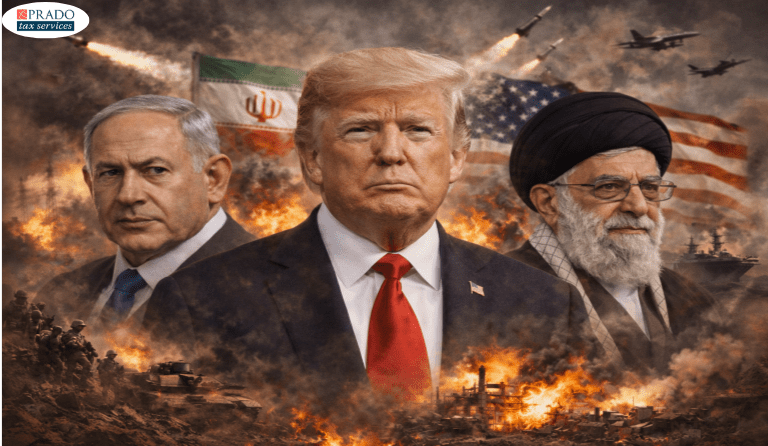
Understanding how a potential war with Iran could affect taxes and the everyday cost of living in the United States means looking beyond headlines and focusing on how economic pressure actually shows up at home. When global tensions rise in regions tied to energy supply and international trade, the effects often reach Americans through higher gas prices, rising household expenses, and shifts in government spending.
That’s why many people are asking whether a war with Iran could change what they pay, what they keep, and how they should plan. It’s a practical question, not a political one, and getting clear on these connections helps taxpayers stay grounded, avoid panic, and make smarter financial decisions during uncertain times.
Why do people keep asking if a war with Iran could affect their finances
Let’s be honest.
People are not suddenly searching for Iran because they love geopolitics.
They are searching because money already feels tight.
Rent is high. Groceries feel unpredictable. Gas never fully settled down. So when news of a possible global conflict surfaces, the instinct is not panic. It is curiosity mixed with concern. People want to know what it means for their own lives.
Many Americans assume global conflicts stay global. That they live on cable news and never cross into everyday finances. But markets do not work that way. When tensions rise in regions tied to oil supply and global trade routes, prices react fast. Governments adjust spending. Businesses adjust pricing. Households feel the squeeze sooner than expected.
That is why the war with Iran’s economic impact keeps coming up in conversations. Not because people expect chaos overnight, but because they have seen how fragile pricing and budgets can be. Even rumors can shift fuel markets. Even uncertainty can slow business activity. And all of that eventually connects back to taxes and household costs.
This is not fear.
It is awareness.
People want to plan instead of guessing. And honestly, that makes sense.
How a conflict between Iran and the United States reaches your wallet
Here’s where things get real.
When people hear about a possible conflict overseas, the first reaction is often, how does that even affect me? I live here. I work here. I pay U.S. taxes. Iran feels far away.
But money doesn’t care about borders.
Global markets are tightly connected, especially when it comes to energy, shipping, and trade. Iran sits in a region that plays a big role in oil supply. When tensions rise there, traders don’t wait to see what happens next. Prices start moving almost immediately. Sometimes, nothing more than fear.
That’s where war with Iran inflation starts to creep in.
Higher oil prices raise transportation costs. Transportation costs raise the price of food, clothing, building materials, and pretty much anything that has to move from one place to another. Which is almost everything. Businesses don’t absorb those costs forever. They pass them on. Slowly at first, then all at once.
Gas is usually the first thing people notice. Then groceries. Then utilities. Then services.
And while wages might inch up on paper, buying power often doesn’t keep pace. That gap is where pressure builds. Not just on household budgets, but on government spending too. Programs cost more to run. Infrastructure costs more to maintain. Defense spending often rises during periods of conflict. All of that feeds into the broader war with Iran’s economic impact.
This is also why economists pay close attention to energy markets during geopolitical tension. According to the U.S. Energy Information Administration, even short-term disruptions or threats in major oil-producing regions can influence fuel prices and inflation expectations across the United States.
Nothing about this happens overnight.
But it doesn’t take years either.
It’s more like a slow leak in a tire. You can keep driving for a while, but eventually you feel it.
What past Iran-United States tensions can teach us about costs and taxes
This would not be the first time Americans have worried about how conflict with Iran could affect their finances. While the United States and Iran have never entered a full-scale declared war, their long and complex relationship has included sanctions, military confrontations, and regional escalations over decades. You can review a detailed historical overview in the U.S. Department of State Historical Background on Iran–United States Relations
One example often cited is the late 1970s and early 1980s during the Iran hostage crisis, when instability in the Middle East disrupted oil markets. Energy prices rose sharply during that period, contributing to high inflation in the United States. Historical inflation data from that era is available through the Bureau of Labor Statistics Consumer Price Index Data.
As prices climbed, everyday expenses became harder to manage. Taxpayers felt pressure not through sudden tax hikes, but through reduced buying power and tighter household budgets.
More recent escalations have followed similar patterns.
Key escalation moments and their economic impact
Before looking at today’s concerns, it helps to revisit key moments when Iran and the United States experienced sharp tensions. These events moved oil markets, influenced inflation, and shaped economic expectations, even without a formal war.
2018 United States withdrawal from the nuclear deal
In May 2018, the United States formally withdrew from the Joint Comprehensive Plan of Action, commonly known as the Iran nuclear deal. Official policy and sanctions background can be reviewed through the U.S. State Department Iran Sanctions Overview.
Following withdrawal, sanctions were reinstated, and Iran’s oil exports declined sharply. Energy markets reacted to reduced supply and increased geopolitical uncertainty.
Economic effects in the United States included:
- Oil market volatility
- Increased energy price sensitivity
- Inflation expectations are shifting upward
There were no immediate tax rate changes tied directly to this decision.
June 2019 downing of a U.S. drone
In June 2019, Iran shot down a U.S. RQ-4 Global Hawk surveillance drone near the Strait of Hormuz. Official updates were provided by the U.S. Department of Defense News and Briefings.
Oil prices briefly spiked as markets reacted to fears of escalation.
Again, there were no emergency IRS rule changes or new tax legislation tied to this event. However, fuel price volatility contributed to short-term inflation pressure.
January 3, 2020, killing of Qasem Soleimani
On January 3, 2020, a U.S. drone strike killed Iranian General Qasem Soleimani. Congressional documentation and official records can be reviewed through Congressional Records and Legislative Information on Congress.gov.
Oil markets surged temporarily amid the risk of broader conflict.
Despite heightened geopolitical tensions, tax rates did not increase immediately. Filing deadlines and core IRS structures remained unchanged.
June 2025 regional escalation and U.S. strikes
In June 2025, amid regional escalation involving Iran and Israel, the United States conducted targeted strikes on key Iranian nuclear facilities. Monitoring and reporting related to nuclear oversight can be reviewed through the International Atomic Energy Agency Official Reports.
Oil markets reacted quickly, and global diplomatic channels reopened to prevent wider war.
No immediate changes to federal tax law followed these events, though defense spending and fiscal planning discussions expanded.
What these escalation moments tell us
Across each of these events, a clear pattern appears. Energy markets respond first. Oil prices move quickly. Inflation pressure follows. Government spending may increase. But tax law does not shift overnight.
The economic impact reaches households through higher fuel costs, rising everyday expenses, and gradual budget pressure rather than sudden tax rate changes. That historical pattern is why many Americans are focused on how inflation and the cost of living may shift rather than expecting immediate IRS action.
What did not happen and why that matters now
Just as important as what happened is what did not happen.
There were no sudden IRS rule changes tied specifically to Iran tensions. Filing deadlines remained the same. Standard deductions were not eliminated. Tax credits were not removed overnight. The overall tax system stayed stable even while inflation increased.
Historical cost-of-living indexing and inflation adjustments are documented through the Social Security Administration Cost of Living Adjustment History.
This matters because it separates economic pressure from tax law changes. A potential war with Iran would not automatically trigger higher tax rates or emergency IRS procedures. What it could do is increase inflation and household expenses, which can make taxes feel heavier even without any legislative change.
Why is this historical pattern still relevant
Economic pressure tends to show up first.
Tax changes come later, if they happen at all.
Energy markets react quickly. Inflation follows. Government budgets adjust. But tax code changes usually move through legislative processes over time, not as immediate responses to geopolitical headlines.
That pattern explains why staying organized, filing accurately, and planning matter more than reacting to news cycles. When it comes to the cost of living and taxes, history shows that preparation consistently outperforms panic.
How gas prices react during global conflict
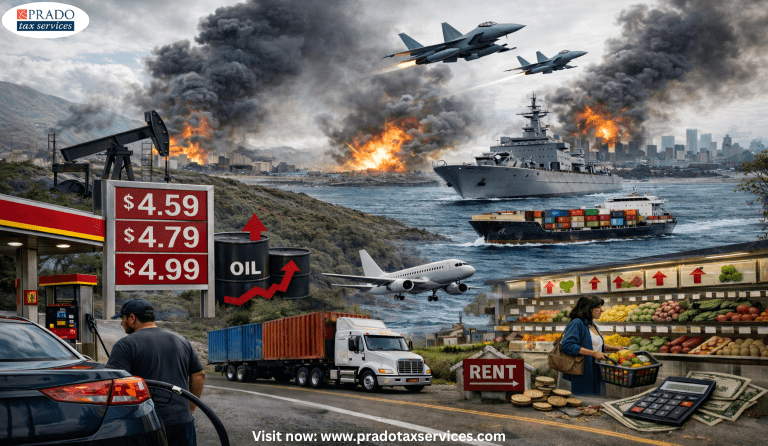
- Energy markets respond fast.
Oil prices often move on expectations, not confirmed events. Even rising tension can push prices higher before anything officially happens. - Gas prices usually follow oil prices.
When crude oil costs more, refineries and distributors pass those increases down the line. Drivers feel it at the pump. - Fuel increases are visible.
Gas prices are posted everywhere. That is why they become the first warning sign that costs may be shifting. - Higher fuel costs spread quickly.
Trucks, planes, and ships all rely on fuel. When transportation costs rise, food, household goods, and services often get more expensive too. - This is why people ask about Iran and gas.
Questions like will gas prices go up with war in Iran come from experience, not panic. Energy disruptions have real effects. - Fuel prices feed inflation.
Rising fuel costs can accelerate war with Iran inflation, slowly affecting rent, groceries, utilities, and everyday spending.
Gas prices are not the entire story.
But they are usually the first signal.
When higher Gas prices stop being temporary and start feeling personal
At first, rising costs feel like a phase.
A bad month. A strange season. Something that will pass.
But when global tension lingers, price increases tend to stick around longer than people expect. That is when households start adjusting habits. Driving less. Buying different brands. Putting off repairs. Small changes that quietly reshape daily life.
This is where war with Iran’s household expenses enters the picture.
Energy costs do not exist in isolation. When fuel prices rise, shipping costs follow. When shipping costs rise, retailers pay more to restock. When retailers pay more, prices inch up across shelves. Groceries, home supplies, school items, and basic services all feel it.
What makes this difficult is that these increases rarely arrive all at once. They show up gradually. A few dollars more here. A few percent there. Over time, those changes squeeze monthly budgets in ways that are hard to undo.
This is also how war with Iran inflation connects to everyday spending. Inflation does not only affect big purchases. It shows up in repeated, ordinary expenses. The kind people pay without thinking twice, until suddenly they have to.
Understanding how war with Iran affects the cost of living helps people notice patterns early instead of feeling caught off guard later.
Where taxes quietly enter the picture
Here is the part many people miss.
Taxes rarely change the moment global tensions rise. There is no headline announcing higher rates tomorrow because of a war overseas. The impact is slower and easier to overlook.
Inflation is the bridge.
When prices rise, wages often rise too, at least on paper. But higher pay does not always mean more buying power. Sometimes income increases just enough to keep up. And when income rises even slightly, some taxpayers end up paying more without feeling better off.
This is where the question of whether a war with Iran will affect taxes and the cost of living becomes very real.
Higher government spending is another factor. Periods of international conflict often bring increased federal spending on defense, energy support, or economic stabilization. That spending has to be funded. Sometimes through borrowing. Sometimes, through policy changes later. Sometimes, through tighter enforcement.
None of this means taxes jump overnight. But it does mean tax planning matters more during uncertain periods.
How a war with Iran can influence taxes and everyday finances
Understanding how a possible war with Iran could affect taxes and everyday finances means recognizing how pressure builds over time. Global conflicts rarely trigger instant tax changes, but they can reshape inflation, spending priorities, and household costs in ways that eventually reach taxpayers.
Inflation is often the first link.
When energy prices and supply chains shift, inflation follows. Inflation quietly changes how much people keep after taxes, even if income looks higher.
Government spending sets the backdrop.
Increased federal spending does not always lead to immediate tax changes, but it can influence future policies and enforcement.
Every day, tax situations feel tighter.
In a war with Iran, inflation affects prices, and small tax details matter more. Withholding accuracy. Estimated payments. Filing the first time correctly.
Understanding the war with Iran’s economic impact gives taxpayers time to plan instead of react.
Households and businesses feel this differently.
The effects of a possible war with Iran do not land the same way for everyone.
For households, the impact shows up in daily decisions. Higher fuel costs. Groceries are creeping up. Less flexibility in the budget. This is where the financial impact of war on Americans becomes personal.
For businesses, pressure often arrives earlier. Fuel affects shipping. Supply costs affect inventory. Margins shrink faster. Cash flow matters more.
This is where tax planning becomes strategic, not optional.
At Prado Tax Services, helping people with checking withholding and filing accurately through personal tax services and planning tax payments around real expenses for business tax services
is especially important during periods of economic uncertainty.
Why tax filing matters more when things feel unstable
When costs rise, tax filing carries more weight.
Mistakes that felt minor in stable years can matter more. Refund timing matters. Accuracy matters. How income and expenses are reported can affect cash flow for the entire year.
Tax filing is not just about compliance.
It is a snapshot of how economic conditions affected your finances.
That’s why tax filing services that focus on accuracy and smart planning at Prado Tax Services are not just about compliance, but part of broader planning when uncertainty is present.
What people often get wrong about war taxes and the cost of living
There’s a lot of noise when global tensions rise. Some of it sticks, even when it shouldn’t.
One common belief is that a war automatically means higher taxes right away. That’s usually not how it plays out. Tax changes tend to lag behind events. What shows up first is economic pressure, not a new line on your tax return.
Another assumption is that only big investors or large companies feel the impact. That’s not true either. When inflation rises, and prices move, everyday households feel it fast. Groceries. Fuel. Utilities. Those costs don’t wait for policy changes.
People also tend to think they’ll have plenty of time to react. But the financial impact of war on Americans often builds quietly. By the time it feels obvious, choices are more limited. Planning earlier gives people more control, even if nothing dramatic ends up happening.
And maybe the biggest misunderstanding is thinking there’s nothing to do but worry. That part just isn’t true. You can’t control global events, but you can control how prepared you are. Reviewing finances. Paying attention to changes. Filing taxes carefully. Those steps matter more than guessing what headlines might come next.
Clear thinking beats panic every time.
Especially when money is involved.
What actually deserves your attention right now
Not every headline matters.
Most of them don’t.
When people hear talk about global conflict, the instinct is to watch everything. Every update. Every alert. That usually creates stress without clarity. A better move is to focus on a few signals that actually connect to your money.
Energy prices are one. Not daily spikes, but trends over weeks. If fuel costs keep climbing, that pressure tends to spread to transportation, food, and services. That’s when war with Iran’s gas prices stops feeling like a short-term issue and starts affecting everyday costs.
Inflation data is another. Inflation doesn’t just change what things cost. It changes how far your income goes and how taxes feel, especially when pay rises on paper, but spending power does not. This is where war with Iran inflation quietly becomes part of household budgeting conversations. Tracking inflation updates from the Federal Reserve helps put those changes in a real context.
Then there’s the government response. Not speeches or speculation, but actual budget decisions, relief programs, and enforcement changes. These moves are slower, but they matter more over time than any single news cycle. Cost of living data published by the Bureau of Labor Statistics offers a clear view into how prices are shifting across the economy.
The goal isn’t to predict the future.
It’s to stay aware without getting pulled into noise.
That’s how people stay steady when uncertainty is in the air. They watch what matters. They ignore what doesn’t. And they make small adjustments early instead of big corrections later.
Planning instead of reacting makes all the difference
Uncertainty has a way of pushing people into reaction mode. Check prices. Worry about headlines. Delayed decisions. I hope things settle on their own.
That usually backfires.
When global tension starts affecting costs, the people who feel the least stress are not the ones who predicted everything perfectly. They’re the ones who stayed organized. They reviewed their numbers. They made sure their tax situation made sense for the year they were actually living in, not the one they hoped for.
This is where planning shows its value.
Understanding how a possible war with Iran could shape inflation, expenses, and government spending gives people context. It turns vague concern into something manageable. That’s especially true when the conversation shifts back to whether a war with Iran affects taxes and the cost of living, because taxes are one of the few areas where people still have control.
For households, that can mean checking withholding, reviewing deductions, and filing accurately so refunds or balances due do not come as a shock. For business owners, it often means tightening recordkeeping, watching cash flow, and planning tax payments around real expenses instead of assumptions.
This is also where having steady guidance matters. At Prado Tax Services, personal tax services and business tax services are built around real-life changes, not just forms and deadlines. When costs rise or income shifts, planning and filing work better together than separately.
No one can control global events.
But people can control how prepared they are for the financial ripple effects.
And that’s usually enough to stay grounded, even when the bigger picture feels uncertain.
A steady way to think about what comes next
Questions about global conflict are not really about geopolitics. They’re about stability. People want to know if their paycheck will stretch. If their bills rise. If their taxes will change in ways they did not expect.
That’s why the question of whether a war with Iran will affect taxes and the cost of living keeps coming up. Not because people are looking for predictions, but because they want clarity.
The truth is, no single event flips a switch. The financial impact of war on Americans usually shows up through slower, quieter shifts. Higher fuel costs. Gradual inflation. Tighter household budgets. More pressure on government spending. Taxes tend to respond to those forces over time, not overnight.
What helps most is staying informed without getting overwhelmed. Paying attention to real signals. Reviewing finances early. Filing taxes carefully. Planning instead of reacting.
For many people, that means having support that understands how economic changes connect to everyday tax situations. At Prado Tax Services, the focus stays on helping people navigate personal tax filing, business tax needs, and ongoing planning with clarity and care, even when the wider world feels uncertain.
Global events will keep changing.
Your approach to your finances doesn’t have to.
Staying prepared, staying accurate, and staying grounded goes a long way.