
Running a restaurant in California means taxes are always part of the picture, even when the focus is on food, staff, and customers. Sales happen daily. Expenses change constantly. Records build up quickly. At the same time, California Restaurant Tax filing continues throughout the year, whether it feels urgent or not.
Understanding California restaurant tax filing before deadlines arrive helps prevent problems later. Sales tax, income tax, and franchise tax all follow different schedules. In addition, tax agencies already receive information from payment processors and payroll systems, which means filings are reviewed against data already on record.
Reviewing records early helps everything stay organized. When information lines up with what agencies expect to see, filing feels more predictable and far less stressful.
How small filing gaps turn into bigger problems
Most restaurants do not fall behind because they ignore taxes. Problems usually start when daily operations take priority.
A filing is delayed. A number is estimated instead of confirmed. Over time, the restaurant tax in California begins to build quietly. There are often no immediate warnings. Issues grow slowly while attention stays on running the business.
Tax problems rarely appear all at once. They develop gradually, which is why early awareness matters.
What needs to be filed
California Restaurant Tax is not one form or one deadline. It includes multiple filings that appear at different points during the year.
Core California restaurant tax requirements
- Sales tax on food and beverage sales
- Income tax based on business structure
- Franchise tax that applies even in slower years
These filings work best when handled together. California restaurant tax filing becomes more manageable when sales and income records are reviewed as one set rather than separately.
Sales tax is where most errors occur
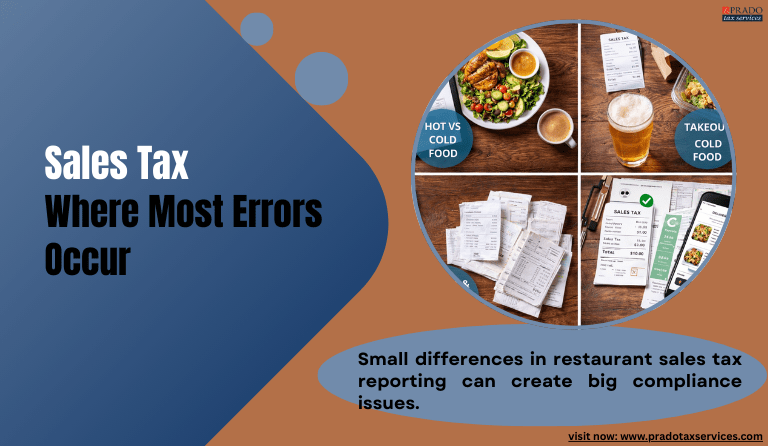
Sales tax can feel straightforward, but real-world situations create confusion. Under the California Restaurant Tax, how food is prepared, served, and sold affects how the tax is reported.
Common California restaurant sales tax challenges
- Hot versus cold food
- Dine-in compared to takeout
- Alcohol and service charges
- Third-party delivery platforms
California restaurant sales tax filings are compared with payment processor reports. Even small differences can lead to questions later. Correct reporting early helps keep the rest of California’s restaurant tax filing on track.
How payroll information affects restaurant tax filing
Payroll is part of restaurant tax discussions because it affects how income is reported, even when payroll is handled by outside providers.
Restaurants generate payroll records through payroll companies or internal systems. Tax agencies receive portions of this information separately. That data is later compared with income and business tax filings.
Payroll information matters because:
- Wage and tip totals support income reporting
- Tax agencies compare payroll data with reported business income
- Inconsistencies can affect California restaurant tax compliance, even when sales tax is filed correctly
Payroll records are handled through third-party providers, but the Prado company reviews payroll information as supporting documentation during California restaurant tax filing to help ensure reported figures align with data already held by tax agencies.
Income tax and franchise tax obligations
Under California restaurant tax regulations, both income tax and franchise tax obligations apply regardless of business performance.
Income tax requirements vary by business structure.
Sole proprietors, partnerships, and corporations each follow different filing rules, but all restaurant businesses are required to file income tax returns.
Franchise tax applies even during slow years.
California franchise tax must be paid even when profits are minimal or when a restaurant operates at break-even.
Accurate sales data is essential for compliance.
Restaurant income tax filings rely heavily on precise sales reporting. When sales figures do not align across records, California restaurant tax filings can quickly become complex and difficult to reconcile.
Why personal and business tax services matter for restaurant owners
Restaurant tax obligations don’t stop at the business level. For owners, business taxes and personal taxes are directly connected, particularly under California restaurant tax rules.
Business tax services
Business tax services focus on how the restaurant reports and files its tax obligations. This includes California restaurant tax requirements such as sales tax, income tax, and franchise tax. These filings reflect the restaurant’s financial activity and must remain consistent throughout the year.
Personal tax services
For owners, business income flows directly into personal tax returns. Profits, losses, and distributions from the restaurant affect personal income tax liability. When business figures are not handled accurately, personal tax filings can also be impacted.
Why this connection matters
When business and personal tax filings are handled separately, inconsistencies can arise. Income may be reported one way at the business level and differently on personal returns. Over time, these gaps can complicate California restaurant tax filings and increase the likelihood of follow-up questions or corrections.
Coordinating personal and business tax services helps keep reporting aligned, reduces errors, and supports stronger California restaurant tax compliance overall.
Tax deadlines do not follow a single calendar
Many restaurant owners expect taxes to be due once a year. That is not how California restaurant tax deadlines work.
Sales tax may be monthly or quarterly. Income and franchise tax filings come later, but they rely on information reported earlier in the year.
Understanding California restaurant tax deadlines helps prevent late filings and keeps reporting steady instead of reactive.
Why compliance matters more than people expect
California restaurant tax compliance is not only about paying on time. It also requires accurate and consistent reporting.
Consistency across filings
Agencies compare sales tax, income filings, and other reported data across systems.
Payment alone is not enough
A return can be paid on time,e but still cause issues if reported figures do not align.
Fixing issues later takes more effort
Correcting past filings often requires additional documentation and follow-up.
Maintaining strong California restaurant tax compliance reduces interruptions and keeps operations running smoothly.
Where professional tax services help
Many problems related to the restaurant tax in California occur when filings are handled separately.
Professional tax services help by reviewing sales and income information together. This coordinated approach improves California restaurant tax compliance and reduces the need for corrections later.
Restaurants often work with Prado Tax Services to keep filings organized, deadlines clear, and records aligned throughout the year.
Common filing mistakes that keep showing up
Many restaurant tax problems in California come from repeated habits:
- Sales totals that do not match payment processor reports
- Income is reported inconsistently from year to year
- Business and personal expenses mixed
- Franchise tax is overlooked during slower periods
These mistakes often feel minor at first, but can weaken California restaurant tax compliance over time.
When records do not match agency data
State agencies already have access to significant business data before returns are filed.
| Filing Type | Data Agencies Already Have | Common Mismatch |
|---|---|---|
| Sales Tax | Payment processor reports | Taxable vs non-taxable food |
| Income Tax | Prior filings | Timing differences |
| Franchise Tax | Registration records | Late or missed filings |
When records do not align, the California restaurant tax filing becomes more complex. Reviewing records together helps prevent this.
Planning makes filing easier
Most stress related to the restaurant tax in California comes from last-minute preparation. Reviewing records throughout the year allows issues to be corrected early.
Planning supports better California restaurant tax compliance and keeps filing predictable.
Learning from past filings
Past filings often reveal repeating issues. Identifying these patterns early improves future California restaurant tax filing and reduces confusion.
Bringing it all together
California restaurant tax filing does not have to feel overwhelming. It requires steady attention throughout the year, not just during tax season. Sales, income, and franchise tax all connect.
By understanding California restaurant tax requirements, staying aware of California restaurant tax deadlines, and maintaining strong California restaurant tax compliance, restaurant owners can manage their tax responsibilities with confidence. Contact Prado Tax Services to maintain an organized, accurate, and predictable approach to restaurant tax filing.