
September 15, 2026, isn’t just another date on a business calendar. It’s the third-quarter estimated tax payment deadline, and for business owners who need to make estimated payments, missing the deadline or paying too little can create an unwanted tax penalty. When business income changes during the year, keeping estimated payments on track can get tricky, especially when you’re focused on running the business. That’s where business tax services in San Leandro can help, giving business owners a clearer view of their estimated tax obligations and making the broader tax filing process easier to manage.
Why the September 15, 2026 Estimated Tax Deadline Matters
For calendar-year taxpayers, September 15, 2026, is the third-quarter estimated tax payment deadline. The payment generally covers income from June 1 through August 31. Missing the deadline or paying too little can result in an estimated tax penalty.
What Is Due on September 15, 2026?
The third estimated tax payment for 2026 is due on September 15. The amount depends on factors such as expected income, deductions, credits, and previous estimated payments. Reviewing these numbers before the deadline can help businesses make a more accurate payment.
Which Businesses May Need to Make Estimated Tax Payments?
Estimated tax payments may apply to:
- Sole proprietors and self-employed business owners
- Partnerships
- S corporations
- C corporations
- Businesses with income that isn’t sufficiently covered by withholding
Because requirements vary by business structure and income, proper business tax planning can help keep estimated tax payments on track.
What Happens If Your Business Underpays Estimated Taxes?
Underpaying estimated taxes can create an extra cost at a time when a business owner already has plenty to manage. The IRS may charge a penalty when required estimated tax payments are too low or paid late. The penalty can depend on the amount underpaid and how long the payment remained unpaid.
Why Waiting Until Tax Filing Season Can Be Risky
Waiting until annual tax filing to review your estimated taxes can leave little room to correct an underpayment. Business income, deductions, and credits can change during the year, so estimated tax planning should be an ongoing process rather than something saved for tax season.
How Business Tax Services Help Avoid Estimated Tax Penalties
Business tax services can make estimated tax planning less of a guessing game. A tax professional can review your current financial information, compare it with previous estimates, and help identify changes that may affect what you need to pay. The IRS also recommends refiguring estimated tax when income, deductions, or credits change during the year.
When reviewing estimated tax payments, business owners should pay attention to these key areas:
1. Reviewing Current Business Income
Your business may look very different today than it did at the start of the year. Changes in sales, new contracts, higher expenses, or a major purchase can all affect your estimated tax position. Reviewing current numbers gives you a better basis for planning the next payment.
2. Calculating More Accurate Estimated Tax Payments
Professional business tax preparation can involve reviewing:
- Current income
- Business expenses
- Deductions and credits
- Previous estimated payments
- Expected annual income
The goal is to make your estimated tax payments based on current information rather than simply relying on an old tax estimate.
3. Adjusting Estimated Payments When Income Changes
If your income changes significantly during the year, your estimated tax may need to be recalculated. For example, landing a large contract during the summer could change the amount you need to set aside for taxes. The IRS allows estimated tax to be refigured when income or deductions change.
4. Keeping Track of Tax Deadlines
A payment can be easy to overlook when you’re busy running a business. Staying aware of quarterly deadlines gives you time to review your numbers, prepare the payment, and address potential issues before they become a bigger problem.
5. Reviewing Federal and California Tax Obligations
Estimated tax planning may involve more than one tax obligation. Business owners may need to consider their federal tax filing, state tax filing, and applicable California requirements when planning their payments.
Common Estimated Tax Mistakes Business Owners Should Avoid
Estimated tax problems often come down to a few simple mistakes. A missed deadline, outdated income estimate, or payment that doesn’t reflect how the business is actually performing can create unnecessary trouble. Staying aware of these common issues can make estimated tax planning much easier.
- Forgetting the September 15 estimated tax deadline
- Using last year’s tax figures without reviewing current income
- Underestimating business income
- Failing to adjust estimated payments after major income changes
- Forgetting estimated payments already made
- Ignoring California tax obligations
- Waiting until the annual tax filing to review estimated taxes
- Assuming an extension automatically extends the payment deadline
The IRS recommends reviewing estimated tax when income, deductions, or credits change during the year.
Federal and California Tax Filing: Why Estimated Tax Planning Matters
Federal and California tax obligations are separate, so both should be part of your estimated tax planning. Looking at only one side can leave a business owner with an incomplete picture of how much tax may need to be paid during the year, especially as California business tax requirements change in 2026.
Federal Tax Filing
Federal estimated tax requirements can apply when a business or business owner expects to owe tax that isn’t sufficiently covered by withholding. Regularly reviewing income, deductions, and previous payments can help with more accurate estimated tax planning.
California State Tax Filing
California has its own tax requirements and estimated payment rules. Businesses operating in the state should account for these obligations when planning their tax payments instead of focusing only on federal taxes.
Why Both Matter for Estimated Tax Planning
Effective estimated tax planning means looking at your expected federal and California tax obligations together. Reviewing both before each payment deadline can help you set aside the right amount and reduce the risk of unexpected estimated tax penalties.
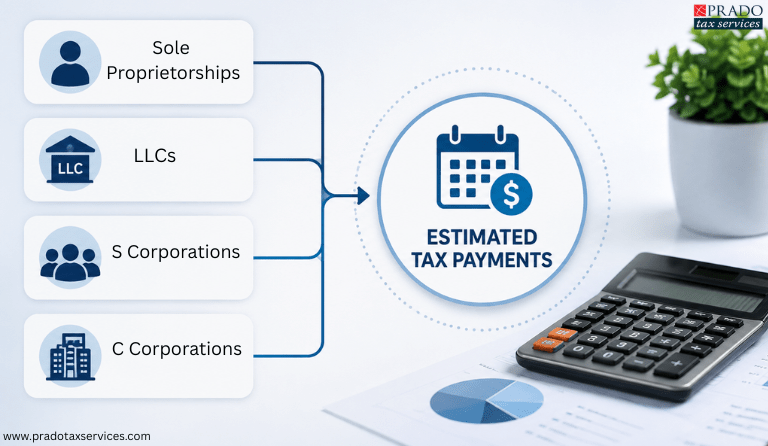
The way a business is structured can affect how its estimated tax payments are calculated and who is responsible for making them. Sole proprietors, partners, S corporation shareholders, and corporations can have different tax responsibilities, so there isn’t one approach that works for every business.
Sole Proprietorships
For sole proprietorship tax filing, business income is generally reported on Form 1040 along with the appropriate supporting schedules. Sole proprietors may also need to make estimated tax payments when they expect to owe enough tax for the year. Regular estimated tax planning can help keep those payments aligned with changing business income.
LLCs
LLC tax filing requirements depend on how the LLC is classified for federal tax purposes. An LLC doesn’t have one standard federal tax return, so understanding its tax classification is an important part of business tax preparation and estimated tax planning.
S Corporations
For S corporation tax filing, the business generally files Form 1120-S, while shareholders report their share of the business’s income on their individual returns. Reviewing business income throughout the year can help shareholders keep their estimated tax payments on track.
C Corporations
C corporation tax filing generally involves Form 1120, and the corporation may need to make its own estimated tax payments when it expects to owe the applicable amount for the year. Reviewing income and previous payments as part of estimated tax planning can help businesses prepare for upcoming obligations.
No matter the structure, business tax services can help businesses understand their filing requirements, review payments already made, and plan for upcoming obligations. For small business tax services, year-round planning can make business tax filing and estimated tax payments easier to manage while helping reduce the risk of underpayment penalties.
What Should You Review Before September 15, 2026?
Before making your third-quarter estimated tax payment, review your current business numbers rather than relying only on earlier estimates. A quick review can make estimated tax planning more accurate and help you spot changes that may affect your federal or California tax obligations.
- Year-to-date business revenue: Check how much your business has earned so far in 2026.
- Current business expenses: Review expenses that may affect your taxable income.
- Estimated tax payments already made: Confirm how much you’ve already paid.
- Expected income for the rest of 2026: Consider whether revenue is likely to increase or decrease.
- Major purchases or asset sales: Account for transactions that could change your tax position.
- Potential deductions and credits: Review deductions and credits that may affect your estimated tax.
- Federal tax obligations: Check whether your federal estimated payments are on track.
- California tax obligations: Review your applicable California estimated tax requirements.
- Changes in business structure: Consider whether a change in your business structure affects your tax situation.
- IRS or California tax notices: Address any notices that could affect your current tax obligations.
You don’t need to predict every dollar perfectly. You do need a reasonable estimate based on where your business is actually headed.
September 15, 2026 Estimated Tax Planning Checklist
What to Review | Why It Matters |
Year-to-date income | Helps estimate current tax liability |
Business expenses | Can affect taxable income |
Previous estimated payments | Shows how much has already been paid |
Expected remaining income | Helps project the rest of the year’s tax position |
Deductions and credits | May affect the amount owed |
Federal obligations | Helps plan federal payments |
California obligations | Helps account for state requirements |
When Should You Work With a Tax Preparer in San Leandro?
Running a business means keeping up with income, expenses, deadlines, and tax requirements at the same time. Professional help can be especially useful when your business income is growing, your income changes from quarter to quarter, or you’re unsure how much estimated tax to pay. A tax preparer in San Leandro can also help you stay organized when you’re dealing with both federal and California tax obligations. Tax preparation can also vary depending on the type of business, particularly for LLCs, S corporations, and C corporations in California.
- Business income is growing or changing
- You’re unsure how much estimated tax to pay
- Your business structure has changed
- Your income fluctuates significantly
- You have federal and California tax obligations
- You’ve missed or are concerned about a payment
- You want year-round business tax planning
- You need help organizing your tax filing
What to Look for in a Tax Professional
When choosing a tax professional in San Leandro, look for someone who understands business taxes and can provide practical support throughout the year. Experience with different business structures and federal and California requirements can be especially helpful.
- Business tax experience
- Knowledge of federal and California requirements
- Experience with different business structures
- Clear communication
- Year-round tax planning
- Organized tax filing support
- Convenient ways to submit tax documents
A local tax preparer like Prado Tax Services in the Bay Area, CA, can provide more than basic tax preparation, offering small business tax services and estimated tax planning to help businesses stay on top of their tax obligations.
Tax planning shouldn’t start when it’s time to file your return. Reviewing your business income, expenses, and estimated payments throughout the year can make tax filing more organized and help you spot potential issues earlier.
Can You File Taxes Online and Still Get Professional Help?
Yes. You can file taxes online while still getting professional assistance when you need it. Online filing can make document submission and communication more convenient, but it doesn’t replace the need to review your tax information carefully. Professional support can be useful when your business has estimated tax payments or both federal and California tax obligations to consider. If you need help filing tax online, Prado Tax Services can provide professional guidance and help you stay organized throughout the filing process.
How Professional Business Tax Services Compare With DIY Tax Planning
Business owners can handle some tax planning on their own, but estimated taxes can get complicated as income, expenses, and tax obligations change. Professional business tax services can provide a more structured review of your financial information, estimated payments, deadlines, and changing tax needs.
DIY Tax Planning | Professional Business Tax Services |
Rely on previous tax information | Review current financial information |
Track deadlines yourself | Help organize important tax deadlines |
Estimate payments independently | Review estimated payment calculations |
May overlook changing obligations | Consider federal and California requirements |
Focus mainly on annual tax filing | Support year-round tax planning |
Address issues after they appear | Identify potential issues earlier |
The goal isn’t to suggest that every business needs professional help for every tax decision. But when income changes or estimated payments become harder to manage, professional guidance can make business tax planning more organized and help reduce the risk of missed payments or estimated tax penalties.
Don't Wait Until Tax Filing Season to Review Estimated Taxes
September 15, 2026, is a deadline worth putting on your calendar now. Estimated tax planning shouldn’t be limited to tax season because business income, expenses, and deductions can change throughout the year. Reviewing your estimated tax payments regularly gives you more time to adjust when your numbers change and address potential issues before they become costly. Professional business tax services can also make year-round tax planning and tax filing easier to manage, helping reduce the risk of overlooked payments and estimated tax penalties.
Staying ahead of estimated payments also means keeping track of California filing deadlines and requirements. Reviewing the California tax filing requirements for the 2026 deadline can help business owners plan ahead rather than deal with everything at tax time.
Conclusion
September 15, 2026, is a good reminder that business taxes shouldn’t be left until filing season. Reviewing estimated tax payments throughout the year can help you stay prepared as your income, expenses, and business circumstances change. Proper business tax planning can also help you keep track of both federal and California tax obligations and reduce the risk of unexpected estimated tax penalties. If you’re unsure whether your payments are on track, getting professional tax support can make the process much easier. A qualified tax professional can review your numbers, help you prepare for upcoming payments, and keep your tax filing organized so you can focus on running your business. If you need help reviewing your estimated tax situation, contact Prado Tax Services to discuss your business tax needs and prepare for the September 15 deadline.
Frequently Asked Questions
September 15, 2026, is the third-quarter estimated tax payment deadline for calendar-year taxpayers. This payment generally covers estimated income for the June 1 through August 31 period.
Estimated tax payments may apply to self-employed business owners, sole proprietors, partnerships, S corporations, C corporations, and others whose income isn't sufficiently covered by withholding. Requirements can vary based on the taxpayer's income and business structure.
A business or business owner may face an estimated tax penalty if required payments are too low or aren't made on time. The amount can depend on factors such as the underpayment and when the payment was made.
Yes. A tax preparer in San Leandro can review current income, expenses, previous estimated payments, and expected tax obligations to help you plan upcoming payments.
Look for a Tax professional in San Leandro who understands business taxes, federal and California requirements, different business structures, and year-round tax planning. Clear communication and organized tax support are also valuable.
Yes. You can file taxes online while getting professional guidance when needed. If you're looking for help filing tax online, a tax professional can assist with organizing information and addressing questions about your tax obligations.
Professional business tax services can help review income, expenses, deductions, previous payments, and upcoming deadlines. This ongoing review can make estimated tax planning more accurate and help reduce the risk of missed or insufficient payments.