
Tariff refunds might feel like money finally coming back after years of extra costs, but the real question starts once you receive it. Do you actually keep it, or does it become taxable income?
With growing discussion around how upcoming tariff refunds may affect U.S. businesses and consumers, many are now asking whether tariff refunds are taxable. The answer depends on how those costs were originally handled and reported.
If those tariffs were claimed as an expense earlier, getting a refund could change your tax position. This is where working with experts like Prado Tax Services can help you avoid costly mistakes.
Why tariff refunds from the trump administration are happening
Tariff refunds didn’t just appear out of nowhere. Most of them trace back to trade policies under Donald Trump, especially duties applied through section 301 tariff refund claims on imports. Businesses ended up paying higher costs at the time, often with no immediate workaround. If you want a deeper look at how these trade shifts affect tax planning, this connects closely with broader tariff and trade policy updates that continue to shape business decisions today.
Later, legal challenges and policy reviews changed things. Some companies pushed back, arguing that those tariffs were applied incorrectly, which opened the door for the Trump administration’s tariff refunds. That’s why refunds are now showing up years after the original payments. These situations often overlap with IRS notice and compliance guidance, especially when businesses need to understand how adjustments are reviewed by tax authorities.
The tariff refund process itself hasn’t been simple. It involves filings, documentation, and long wait times before anything is approved.
And now that money is finally coming back, the bigger question isn’t just about getting it. It’s about how those tariff refunds are treated when tax season comes around.
Are tariff refunds actually taxable for businesses
Short answer. In many cases, yes.
It depends on how the cost was treated earlier.
Whether tariff refunds are taxable depends on how those costs were handled earlier. If your business treated those tariffs as a deductible expense, then getting that money back can change things. The refund may need to be reported as income, which increases your taxable amount for that year.
Why do many businesses get confused here?
This is where confusion starts to build. Many assume a refund is just a correction, but tax rules don’t always see it that way. If you already benefited from deducting those costs, the IRS tax refund treatment may require you to recognize that refund as income.
What this means for your tax filing
That’s why questions like ” Are tariff refunds considered income and what is the right tariff refund tax treatment are becoming more common. The tax implications of tariff refunds depend on your past filings, not just the refund itself.
If you’re unsure how this applies to your situation, reviewing your records carefully or working with professional tax services can help you avoid costly mistakes.
What the IRS expects when you report tariff refunds
Not every refund is treated the same. But when it comes to tariff refunds, the IRS is pretty clear about one thing. If you got a tax benefit earlier, you may need to account for it now.
What usually triggers tax reporting
- You claimed tariff costs as a business expense
- You later received a refund for those same costs
- The refund changes your previously reported tax position
In this case, the IRS tariff refund rules may require you to report that amount as income.
Where most businesses slip
Some assume the refund just offsets the old expense automatically. Others forget to report it in the correct year. Both can create issues, especially if the numbers don’t match past filings.
Timing matters more than people expect.
How to handle it properly
- Check how the original tariff expense was recorded
- Match the refund to the correct tax year
- Review the tax implications of tariff refunds before filing
Even small mistakes here can lead to penalties or notices from the Internal Revenue Service.
If you want to avoid that back-and-forth, working with Prado Tax Services helps you get it right the first time.
Where businesses get tariff refunds wrong
Most mistakes are simple.
Businesses receive tariff refunds and assume they don’t affect taxes. That’s where things go off track. If those costs were already claimed earlier, the refund can change your tax position.
Another common issue is timing. Companies don’t match the refund with the correct year or forget how the expense was recorded. This is where understanding business tax structure and filing rules becomes important, because different setups handle adjustments differently, and mistakes often start there.
The question of whether tariff refunds are considered income comes up here for a reason. In many cases, they are, depending on the original treatment. Getting the tariff refund tax treatment wrong is easier than people think.
That’s why reviewing everything properly or working with Prado Tax Services in San Leandro helps you avoid small mistakes turning into bigger ones.
How tariff refunds affect your business and personal tax filings
Once you receive tariff refunds, the impact doesn’t stay limited to your books. It can flow into both your business filings and, in some cases, your personal tax situation.
The business side of the impact
For businesses, it usually shows up as a business tax adjustment. If those tariffs were deducted earlier, the refund may increase your taxable income in the current year. This is where the tax implications of tariff refunds become more visible, especially when reviewing financial statements.
That’s also where business tax services become important, helping companies review how these adjustments fit into their overall filings, especially when older records need to be checked carefully.
Personal tax connection
If your business income flows into your personal return, changes from tariff refunds can affect what you report there, too. That’s why it’s important to look beyond just the business side and understand how it connects to your overall personal tax situation.
Some people miss this link and only focus on one part. But both sides are closely connected.
Taking time to review how everything is recorded or working with Prado Tax Services can help you stay accurate and avoid surprises during filing.
What smart businesses are doing with tariff refunds right now
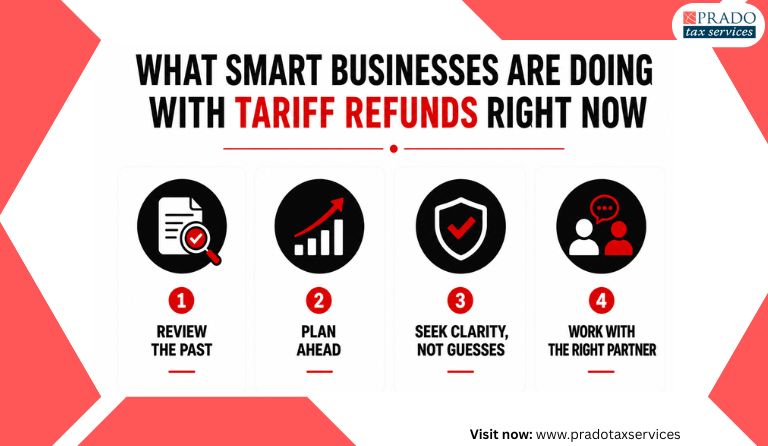
Smart businesses aren’t treating tariff refunds as a one-time gain. They’re treating them like a trigger to review everything.
First, they go back and check how those original costs were recorded. If the expense was deducted earlier, they already know the refund might affect their current tax position. This helps them get the tariff refund tax treatment right instead of fixing it later.
Next, they look ahead.
Instead of waiting for filing season, they estimate how those tariff refunds could impact their income now. This gives them time to plan, adjust, and avoid surprises when numbers actually matter.
They also don’t guess.
When it comes to IRS tariff refund rules or the overall tax implications of tariff refunds, they prefer clarity over assumptions. Even a small mistake here can carry forward into bigger issues.
That’s why many choose to work with Prado Tax Services early in the process, so everything stays aligned from the start rather than being corrected later.
What you should do next if you’ve received tariff refunds
If you have received tariff refunds, it is important to handle them carefully rather than making assumptions. These situations can become complex, especially when past filings and current reporting do not align.
Following proper tax filing and reporting practices as a U.S. or California taxpayer is essential, since both federal and state rules may apply when dealing with adjustments like tariff refunds. Taking a structured approach will help you stay compliant and avoid unnecessary errors.
Step 1: Check How the Original Tariff Cost Was Recorded
Start by reviewing your previous tax filings to understand how the tariff costs were treated. If those costs were deducted as a business expense or included in the cost of goods sold, the refund may impact your current tax reporting.
Step 2: Understand the Tax Impact
Determine how the refund affects your taxes. If the original tariff cost reduced your taxable income, the refund is generally treated as income under the tax benefit rule. If no tax benefit was received previously, the refund may not be taxable. The correct treatment depends on your earlier filings.
Step 3: Report in the Correct Tax Year
Make sure the refund is reported in the appropriate tax year. In most cases, refunds are reported in the year they are received. However, if the situation involves prior year adjustments, additional review may be required to ensure proper treatment.
Step 4: Review All Details Before Filing
Before submitting your tax return, take time to carefully review the following:
- The total refund amount and whether it matches official records
• Supporting documents such as refund notices and prior tax filings
• How the refund is reported, whether as income or as an adjustment
• Consistency between this reporting and the rest of your tax return
This step helps prevent discrepancies and reduces the risk of future issues or notices.
Step 5: Get Expert Clarity if Needed
If anything is unclear, it is best to confirm before filing. Working with a qualified tax professional, such as Prado Tax Services, can help ensure the correct treatment and reduce the risk of errors.
Final Thoughts
Handling tariff refunds step by step makes the process more manageable and helps ensure accurate reporting. A careful approach keeps you compliant and reduces the likelihood of complications later.
Final thoughts on tariff refunds and your tax position
Tariff refunds can feel like a win at first, but they come with responsibility. What really matters is not just receiving the money, but how you handle it afterward.
The question do you have to pay taxes on tariff refunds doesn’t have a one-line answer, but in many cases, the answer leans toward yes. It depends on how those costs were treated earlier and how the refund fits into your current filings. That’s where the real impact shows up.
For most businesses, the safest approach is simple. Don’t assume, don’t rush, and don’t ignore the details.
Taking time to understand the tax implications of tariff refunds, reviewing records, and making sure everything is reported correctly can save you from bigger problems later. A lot of issues come up simply because things weren’t checked properly or were rushed during filing.
And if there’s any doubt, getting support from Prado Tax Services can help you move forward with clarity instead of uncertainty. Their team works across both personal tax services and business tax services, including full tax filing services, so everything gets handled in a more structured and accurate way.