

The October 15, 2026 tax deadline is approaching, and if you filed a tax extension for your 2025 federal return, it’s time to get the paperwork finished. An extension gives you additional time to file, but it doesn’t mean you can put your tax return aside indefinitely. Missing documents, complicated income records, or uncertainty about taxes owed can make filing feel overwhelming, especially when the extended tax deadline is close. That’s where professional tax preparation help can make the process easier. Whether you need help reviewing your records, preparing an extended tax return, or understanding what you may owe, getting organised early can help you avoid a last-minute rush. If you’re looking for tax services in San Leandro, San Francisco tax preparation, or reliable Bay Area Tax Services, professional guidance can help you move from an unfinished return to a completed filing with greater confidence.
What Is the October 15, 2026 Tax Deadline?
For taxpayers who requested a federal tax extension for their 2025 income tax return, October 15, 2026 is the extended tax return deadline. The extension gives you additional time to prepare and submit your return, which can be helpful if you weren’t ready by the original tax return due date. But an extension isn’t a free pass to delay everything until the last minute. You still need to complete your return and make sure the information you provide is accurate.
The 2026 tax deadline can feel confusing because there are two different dates to keep in mind. The original deadline is when the return would normally have been due. The extended tax deadline is the later date available after a valid extension. If you’re preparing for the current filing season, our guide to tax filing in 2026 also covers important deadlines and preparation steps for California taxpayers.
Tax Term | What It Means |
Tax deadline | The regular date a federal tax return is due |
Tax extension | Additional time to file a tax return extension |
Extended tax deadline | The later filing date provided after an extension |
October 15, 2026 | The extended filing deadline for most taxpayers who received the standard extension |
If you’ve already filed an extension, the next step is to focus on completing your extended tax return. Gathering your tax documents, reviewing your income, checking deductions and credits, and determining whether you still owe taxes can make the process much more manageable. Starting early also gives you time to seek tax filing assistance if something doesn’t look right or you’re unsure how to finish your return.
What Should You Do If You Filed a Tax Extension?
Filing a tax extension deadline only gives you more time to submit your return. It doesn’t complete the return for you. If you requested an extension earlier in the year, now is the time to move forward with your extended tax return and make sure everything is ready before October 15. Taking care of the preparation early can also give you time to fix missing information or get tax filing assistance if you run into questions.
Start by gathering the records you need and reviewing your financial information for the 2025 tax year. If you’ve changed jobs, started a business, earned freelance income, sold investments, or had other changes, make sure those details are reflected in your return. Your deductions, credits, and payments should also be reviewed before you file.
What Should You Do Before October 15?
- Gather your remaining tax documents and income records.
- Review W-2s, 1099s, and other applicable income information.
- Check documentation for deductions and tax credits.
- Review estimated tax payments and other payments already made.
- Determine whether you have a remaining tax liability.
- Complete your extended federal income tax return.
- Check the return for missing or incorrect information.
- File the return before the October 15, 2026 tax deadline.
If you’ve already filed an extension, the next step is to focus on completing your extended tax return. Gathering your tax documents, reviewing your income, checking deductions and credits, and determining whether you still owe taxes can make the process much more manageable. If you want additional guidance on getting your records and return ready, our guide to tax filing in 2026 covers key preparation steps for California taxpayers.
How Can You File an Extended Tax Return Before October 15?
Once you’ve filed an extension, the next job is completing your actual federal income tax return. If you’re wondering how to file an extended tax return without rushing through it, the best approach is to work through your records one step at a time. You don’t need to wait until the final days before the October 15, 2026 tax deadline to get started.
1. Gather Your Tax Documents
Start by collecting the documents that show your income, expenses, payments, and other tax information for the year. Depending on your situation, this could include W-2s, 1099s, business records, investment statements, and documentation for deductions or credits. Having everything together makes it easier to spot missing information before you begin preparing the return.
2. Review Your Income Carefully
Go through each source of income and make sure it has been accounted for. Don’t overlook freelance work, self-employment income, investment income, or other earnings simply because they weren’t part of your regular paycheck. If something has changed since you originally expected to report it, take the time to review it rather than guessing.
3. Check Your Deductions and Credits
Your deductions and credits can affect your overall tax liability, so review the records supporting anything you’re claiming. Keep the relevant documentation available in case you need to verify the information later. A careful review can also help prevent avoidable mistakes on your extended return.
4. Review Taxes You've Already Paid
Before you finish the return, check any estimated tax payments, withholding, or other payments that have already been made. This helps you understand whether you may have a balance due or whether you’ve already paid toward your federal tax liability.
5. Complete and Review the Return
Once your information is organised, complete the federal income tax return and review it carefully. Check names, identifying information, income figures, deductions, credits, payment information, and other required details. A final review can catch an error before you submit the return.
6. File Before the Extended Tax Deadline
The final step is submitting your completed return by the applicable tax filing deadline in 2026. If October 15 applies to your extension, don’t leave the filing until the last possible moment. If you’re still unsure about how to extend tax filing, prepare the return, or deal with information that doesn’t seem to fit, professional tax filing assistance can help you work through the process.
The goal isn’t simply to file quickly. It’s to submit a complete and accurate extended tax filing deadline return while you still have enough time to address questions or missing information.
What Is Form 4868 and How Does It Relate to a Tax Extension?
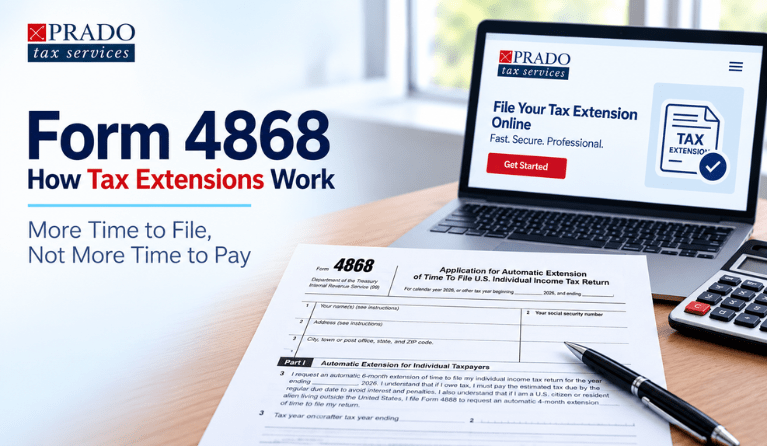
Form 4868 is the IRS form used to request an automatic extension of time to file a U.S. individual income tax return. For most calendar-year taxpayers, a timely extension can provide up to six additional months to file, moving the deadline to October 15, 2026, for the 2025 tax return.
If you’re searching for Form 4868 online or a Form 4868 PDF, the IRS provides both electronic filing options and the official form. You can also request an extension electronically through tax software or a tax professional.
For more details about requesting an extension, filing Form 4868, and the difference between filing and paying, see the IRS guidance on tax extensions.
It’s worth understanding what an extension actually does. Form 4868 gives you more time to file your return, but it doesn’t give you more time to pay federal income taxes you owe. Any unpaid tax may continue to accrue interest and potentially penalties after the original payment deadline.
So, an IRS form to extend tax filing shouldn’t be viewed as the final step. Once your extension is approved, you still need to prepare and submit the actual tax return by the extended deadline. If your return involves complicated income, missing records, or questions about your tax liability, getting professional tax preparation help can make the process easier. If you want to learn more about the extension process, see our guide on filing a personal tax extension.
Does a Tax Extension Give You More Time to Pay?
A tax extension 2026 gives you more time to file your tax return, but it generally doesn’t give you extra time to pay federal income taxes you owe. This distinction is easy to overlook. You may have until October 15, 2026, to submit your extended return, but any tax that was due with the original filing deadline generally remains subject to the applicable payment rules. Waiting until October to pay a balance doesn’t automatically mean there will be no interest or penalties.
If you’re preparing an extended tax return, take a moment to review how much you’ve already paid through withholding, estimated tax payments, or other payments. Then compare those amounts with your final tax liability. If there’s still a balance, understanding your payment obligations before filing can help you avoid an unpleasant surprise.
If You Think You May Owe Taxes
- Review your estimated tax payments and federal withholding.
- Check whether you’ve already made a payment toward your balance.
- Calculate the amount you may still owe.
- Make the appropriate payment as soon as possible.
- Keep confirmation and payment records for your files.
An IRS extension is designed to provide additional time for filing, not to postpone tax obligations indefinitely. If you’re unsure about your tax due date, how much you owe, or how payments should be handled, professional tax filing assistance can help you understand your situation before the October 15, 2026 tax deadline.
What Happens If You Miss the October 15 Tax Deadline?
If you can’t finish your extended tax return by October 15, don’t ignore the situation. The last day to file taxes after a standard extension is October 15, 2026, for most calendar-year taxpayers who received the extension. If you miss the last day to file your tax return after the extension deadline, the best next step is generally to complete and file your return as soon as possible. The IRS says a failure-to-file penalty can apply when a return isn’t filed by the due date, including an extended due date.
If you miss the deadline, understanding what to do after missing a tax deadline can help you take the right next steps instead of delaying your return further.
If you still owe federal tax, check your unpaid balance and make a payment as soon as you can. Interest generally continues to accrue on unpaid tax, and a failure-to-pay penalty may also apply. The exact amount depends on your circumstances.
Don’t let the fear of tax penalties keep you from taking action. If your return is already late, filing sooner can help limit additional late filing penalties. If you’re dealing with missing records, complicated income, or uncertainty about your tax liability, professional tax filing assistance can help you understand what needs to be addressed.
What Can Make a Late Return More Complicated?
Situation | Why It Can Create a Problem |
Missing tax documents | Makes it harder to complete the return accurately |
Unreported income | May require additional review before filing |
Unpaid tax | Interest and penalties may apply |
Complex deductions | Supporting documentation may need closer attention |
Business income | May require more detailed reporting |
If you’re already past the deadline, the situation isn’t necessarily hopeless. Gather your records, determine what remains unfinished, and work toward filing the return as soon as possible. If you’re unsure where to begin, getting professional tax preparation help can make the next steps clearer.
When Should You Get Professional Help Filing an Extended Return?
If you’re still preparing your return as the October 15, 2026 tax deadline approaches, professional tax preparation help can make the process easier. This can be especially helpful when your return involves multiple income sources, business income, complicated deductions, or missing documents.
When You Need Tax Preparation Help?
- You have multiple sources of income.
- You’re self-employed or have business income.
- You’re unsure which deductions or credits apply.
- You don’t know how much tax you owe.
- Your tax documents are incomplete.
- The deadline is approaching, and your return isn’t ready.
Professional personal tax services can help organise your records, prepare your extended tax return, review the information, and complete the filing process before the deadline.
If you’re self-employed or have business income, business tax services can help you organise your records and address the tax requirements related to your business.
Where Can You Get Tax Filing Help in San Leandro and the Bay Area?
If you’re preparing an extended return and need help before the October 15, 2026 tax deadline, working with a local tax professional can make the process easier. Taxpayers searching for tax services in San Leandro, San Leandro tax filing, or tax prep in San Francisco can look for a provider that offers clear guidance and support throughout the filing process.
For those in the wider area, San Francisco tax services and San Francisco tax preparation can also provide assistance with organising records, preparing returns, and addressing questions about taxes owed. Whether you’re looking for a San Leandro tax consultant, tax preparer San Leandro, or tax filing Bay Area services, choosing help that matches your tax situation can make the final steps less stressful.
If your extended return is incomplete, don’t wait until the deadline is here to ask for help. Starting early gives you more time to gather missing information, review your return, and address any filing questions.
What Should You Have Ready Before Filing Your Extended Return?
Getting your paperwork together early can make filing your extended tax return much less stressful. Before the October 15, 2026 tax deadline, review your records and make sure you have the information needed to complete your return accurately. A little preparation now can help you spot missing documents, clarify questions, and avoid a rushed filing.
October 15 Tax Filing Checklist
- Income documents: W-2s, 1099s, and other records showing your income
- Business records: Income and expense information if you’re self-employed or own a business
- Investment records: Statements and transaction information for applicable investments
- Deduction records: Receipts and documents supporting deductions you plan to claim
- Tax credit information: Documents needed to support applicable tax credits
- Previous tax return: A copy of your most recent return for reference
- Extension information: Records related to the tax extension you filed
- Payment records: Estimated tax payments and other payments already made
Once everything is collected, give your records one final review before filing. If a document is missing or you’re unsure how to report certain information, getting tax filing assistanceWhat Happens If You Miss the October 15 Tax Deadline? early can give you time to resolve the issue before the deadline.
Get Help Filing Before the October 15, 2026 Tax Deadline
The October 15, 2026 tax deadline gives taxpayers with an approved extension additional time to file, but the extra time can go quickly. If your extended tax return isn’t ready, start gathering your records and addressing any missing information now. You don’t have to handle complicated tax questions on your own. Professional tax preparation services can help you organise your documents, prepare your return, review the details, and complete the filing process. Getting started early can also give you more time to resolve issues before the extended tax deadline arrives. If you’re looking for filing taxes after extension help in San Leandro or the Bay Area, Prado Tax Services can help you take the next step toward completing your return.
Frequently Asked Questions About the October 15, 2026 Tax Deadline
For most calendar-year taxpayers who received a federal extension, October 15, 2026, is the extended filing deadline for the 2025 tax return. If this deadline applies to you, aim to complete and submit your return before the date arrives.
Gather your income records, deductions, credits, payment information, and other required tax documents. Prepare the return carefully, review the information, and file it by the applicable extended tax deadline. If you're unsure about the process, professional tax filing assistance can help.
Form 4868 is used to request an automatic extension of time to file an individual federal income tax return. It provides additional time to file, but generally doesn't extend the time to pay taxes owed.
Yes. Taxpayers can request an extension electronically through IRS-approved options or through a tax professional. The IRS also provides access to the official Form 4868 PDF.
Generally, no. A tax extension 2026 provides additional time to file your return, not additional time to pay federal taxes owed. Interest and applicable penalties may continue to accrue on unpaid amounts.
If you miss the deadline, file your return as soon as possible. Review whether you have an unpaid balance and address any applicable interest or penalties. If you're unsure what to do next, tax preparation help can make the process easier.
Yes. Professional tax preparation services can help you organise documents, prepare your return, review the information, and complete the filing process when you're working toward the October 15 deadline. If you're self-employed, you may also find our guide to tax filing help for freelancers and self-employed professionals useful.
Don't wait until the last minute. Gather the documents you have, identify what's missing, and get help with any questions that are holding up your return. Taking action early can make it easier to complete your filing on time.