
The 2026 Form 1040 may include updates that affect how taxpayers report income, claim deductions, and qualify for certain tax benefits. Even small changes can have an impact when it’s time to file.
Understanding the latest Form 1040 updates can help reduce errors, avoid delays, and keep your tax return aligned with current IRS requirements
This guide covers the key changes taxpayers should know about the Form 1040 U.S. Individual Income Tax Return, including updates related to tax credits, deductions, reporting requirements, and Form 1040-ES estimated tax payments.
What are the biggest changes in the 2026 Form 1040?
The 2026 Form 1040 may include updates to income reporting requirements, tax credits, deductions, and estimated tax payment rules. While some changes are routine annual adjustments, others could affect eligibility for certain tax benefits or the information taxpayers must report on their returns.
Area | Potential 2026 Update | Who May Be Affected |
Income Reporting | Updated reporting thresholds or requirements | Employees, freelancers, and investors |
Standard Deduction | Annual inflation adjustments | Most taxpayers |
Tax Credits | Changes to eligibility limits or credit amounts | Families, students, and low-income taxpayers |
Estimated Taxes | Updated payment thresholds and calculations | Self-employed taxpayers and investors |
Filing Instructions | Revised IRS guidance and reporting requirements | All taxpayers |
Taxpayers seeking assistance with annual tax filing requirements may benefit from professional Personal Tax Filing services and should stay informed about updated tax rules for 2025 and 2026, as changes to deductions, tax credits, and filing requirements could affect their Form 1040 tax return.
Taxpayers who file a Form 1040 U.S. Individual Income Tax Return should review the latest IRS guidance before filing. Even a small update can affect tax calculations, refund amounts, or filing accuracy.
Why should taxpayers pay attention to the 2026 Form 1040 updates?
The IRS updates tax forms and filing requirements regularly, and even minor adjustments can affect how a return is prepared. Changes to the 2026 Form 1040 may impact income reporting, deductions, tax credits, estimated tax payments, and other filing requirements.
Why these updates matter
- Help ensure income is reported accurately
- Reduce the risk of filing errors
- Support eligibility for available tax credits and deductions
- Prevent delays in return processing
- Minimize the chance of IRS notices or penalties
Taxpayers who may be most affected
Taxpayer Group | Why Form 1040 Updates Matter |
Self-Employed Individuals | May face changes related to income reporting and estimated taxes |
Freelancers and Gig Workers | Often need to report multiple income sources |
Investors | May be affected by reporting requirements for investment income |
Rental Property Owners | Must accurately report rental income and expenses |
Retirees | Frequently receives income from multiple sources |
Families Claiming Credits | May need to review updated eligibility requirements |
Reviewing the latest Form 1040 updates before filing can help taxpayers avoid common mistakes, claim eligible tax benefits, and submit a more accurate return.
Who could be affected by the 2026 Form 1040 changes?
Not every tax update affects every taxpayer. Some changes may have little impact on employees with a single source of income. In contrast, others could be more important for self-employed people, who receive investment income or make estimated tax payments throughout the year.
You may want to pay closer attention to the 2026 Form 1040 updates if you fall into any of these categories:
- Self-employed professionals and freelancers
- Gig workers and independent contractors
- Investors with dividend or capital gain income
- Rental property owners
- Retirees receiving multiple income sources
- Taxpayers who make quarterly estimated tax payments using Form 1040-ES
- Families claiming tax credits and deductions
The more complex your tax situation becomes, the more likely it is that a filing update could affect your return.
What sections of the 2026 Form 1040 have changed?
The 2026 Form 1040 may include updates in several areas that taxpayers should review before filing. While not every change will affect every taxpayer, certain sections of the return are more likely to influence tax calculations, reporting requirements, and eligibility for tax benefits.
Areas taxpayers should review
Income Reporting
- Wages and salary income
- Self-employment earnings
- Investment income
- Retirement distributions
- Other taxable income sources
Deductions
- Standard deduction adjustments
- Itemized deduction considerations
- Income-related deduction thresholds
Tax Credits
- Eligibility requirements
- Income limitations
- Credit amount adjustments
Estimated Taxes
- Quarterly payment requirements
- Payment calculations
- Form 1040-ES updates
IRS Reporting Requirements
- Filing instructions
- Supporting documentation
- Additional reporting obligations
The following sections examine these areas in more detail and explain how they may affect taxpayers filing a Form 1040 U.S. Individual Income Tax Return in 2026.
Changes to income reporting on 1040 income tax forms
Income reporting remains one of the most important parts of completing a Form 1040 U.S. Individual Income Tax Return. Taxpayers should review the latest IRS instructions to ensure all taxable income is reported accurately and supported by the appropriate documents.
Keeping accurate income records throughout the year can make tax preparation easier and reduce reporting errors.
Income sources that may require reporting
- Wages and salaries
- Self-employment income
- Gig economy earnings
- Investment income
- Rental income
- Retirement distributions
- Unemployment compensation
- Other taxable income
Common tax documents used for income reporting
Tax Document | Purpose |
Form W-2 | Reports wages, tips, and taxes withheld |
Form 1099-NEC | Reports nonemployee compensation |
Form 1099-K | Reports payments received through third-party platforms |
Form 1099-INT | Reports interest income |
Form 1099-DIV | Reports dividend income |
Form 1099-R | Reports retirement distributions |
Taxpayers can also review our Frequently-Used Tax Forms page for additional IRS forms and filing resources.
Before filing your return
- Verify that all income documents have been received.
- Compare reported income with your personal records.
- Review IRS instructions for any updated reporting requirements.
- Keep supporting documents with your tax records.
Accurate income reporting helps reduce filing errors and ensures the information reported on your return matches the records provided to the IRS.
Standard deduction and tax bracket adjustments for 2026
The IRS typically adjusts standard deduction amounts and tax brackets each year to account for inflation. While these changes may seem minor, they can affect taxable income, withholding amounts, and overall tax liability for many taxpayers.
Standard deduction adjustments
An increase in the standard deduction may allow eligible taxpayers to reduce more of their taxable income before federal income taxes are calculated. Most taxpayers claim the standard deduction rather than itemizing deductions, making annual adjustments particularly important.
Tax bracket updates
Tax brackets are also commonly adjusted to reflect inflation. These updates help determine how much tax is applied to different portions of taxable income and may affect the amount owed or refunded when a return is filed.
What taxpayers should review?
Filing Status
- Single
- Married Filing Jointly
- Married Filing Separately
- Head of Household
- Qualifying Surviving Spouse
Income Level
- Employment income
- Self-employment income
- Investment income
- Retirement income
Withholding and Estimated Taxes
- Federal tax withholding
- Quarterly estimated tax payments
- Year-end tax projections
Because standard deductions and tax brackets influence overall tax calculations, taxpayers should review the latest IRS figures before preparing their 2026 return.
What Taxpayers Should Know About Form 1040-ES and Estimated Taxes?
Many taxpayers pay their federal taxes through withholding from a paycheck. Others may need to make tax payments throughout the year using Form 1040-ES, the IRS form for calculating and submitting estimated taxes.
Individuals with self-employment income or business activities may benefit from reviewing both personal and business tax obligations.
What is Form 1040-ES?
Form 1040-ES helps taxpayers estimate and pay federal income taxes on income that is not subject to withholding. The form includes worksheets and payment instructions that can help determine how much should be paid each quarter.
Why do estimated tax payments matter?
Estimated tax payments help taxpayers avoid a large tax bill at filing time. Making timely payments can also reduce the risk of penalties and interest for underpayment.
When are estimated taxes typically paid?
Estimated taxes are generally paid four times per year:
- First Quarter
- Second Quarter
- Third Quarter
- Fourth Quarter
The IRS publishes annual payment deadlines that taxpayers should review each year.
What income may require estimated tax payments?
- Self-employment income
- Freelance income
- Gig economy earnings
- Rental income
- Dividend income
- Interest income
- Capital gains
- Certain retirement income
Understanding whether estimated taxes apply to your situation can help improve tax planning and reduce surprises when filing your annual return.
Who needs the IRS Form 1040 ES in 2026?
The IRS Form 1040-ES is generally used by taxpayers who expect to owe taxes on income that is not subject to withholding. If taxes are not automatically withheld from certain income sources, quarterly estimated tax payments may be required.
Taxpayers who commonly use Form 1040-ES include:
- Self-employed individuals
- Freelancers and independent contractors
- Gig economy workers
- Small business owners
- Investors receiving dividends, interest, or capital gains
- Rental property owners
- Retirees with significant non-withheld income
- Taxpayers with multiple sources of income
You may also need to make estimated tax payments if the amount withheld from your wages, pension, or other income is not enough to cover your expected tax liability for the year.
Before submitting an IRS estimated tax payment form, it’s important to review the latest IRS requirements and calculate estimated payments as accurately as possible.
Common Mistakes That Could Delay Your Tax Return
Even when taxpayers use the correct version of the 2026 Form 1040, filing errors can still create processing delays or lead to IRS correspondence after a return is submitted.
Common mistakes to avoid
Missing income documents
Failing to report income from forms such as W-2s or 1099s can result in mismatched IRS records and additional review.
Incorrect personal information
Errors involving Social Security numbers, names, or filing status can slow return processing and create unnecessary complications.
Claiming credits without verifying eligibility
Tax credits often have income limits and qualification requirements. Claiming a credit without meeting the requirements may lead to adjustments or delays.
Using inaccurate banking information
Entering the wrong routing or account number can delay direct deposit refunds.
Ignoring estimated tax obligations
Taxpayers who should have made quarterly payments using Form 1040-ES may face penalties or interest if estimated taxes were not paid correctly.
Filing before receiving all tax forms
Submitting a return too early may require amendments if additional income documents arrive later.
Understanding the causes of IRS tax refund delays can help taxpayers avoid common filing issues and set realistic expectations for refund processing.
A practical checklist before filing your 2026 Form 1040
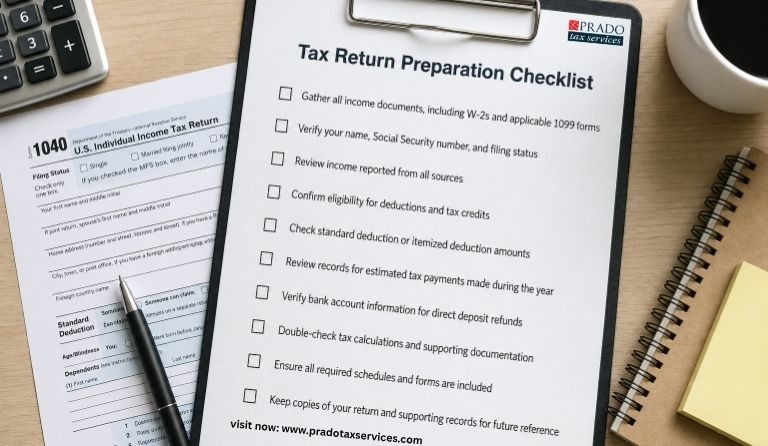
Before submitting your tax return, take a few minutes to review the following items:
Tax return preparation checklist
☐ Gather all income documents, including W-2s and applicable 1099 forms
☐ Verify your name, Social Security number, and filing status
☐ Review income reported from all sources
☐ Confirm eligibility for deductions and tax credits
☐ Check standard deduction or itemized deduction amounts
☐ Review records for estimated tax payments made during the year
☐ Verify bank account information for direct deposit refunds
☐ Double-check tax calculations and supporting documentation
☐ Ensure all required schedules and forms are included
☐ Keep copies of your return and supporting records for future reference
Completing a final review before filing can help reduce errors and improve the accuracy of your Form 1040 U.S. Individual Income Tax Return. Taxpayers who plan to file early should also understand how filing early may affect their tax refund timeline, return processing, and overall filing experience.
How can taxpayers prepare for the 2026 Form 1040 changes?
Preparing early can make filing season less stressful and help reduce the risk of errors. Taxpayers should review the latest IRS guidance, organize tax documents, and keep records of income, deductions, and estimated tax payments throughout the year.
A tax professional can also help identify filing requirements, available tax benefits, and potential issues before a return is submitted. For taxpayers with self-employment income, investment earnings, or complex tax situations, following best practices for accurate tax filing and seeking professional guidance may provide additional peace of mind.
Prado Tax Services offers Personal Tax Filing and Business Tax Filing services to help taxpayers prepare accurate returns and stay compliant with changing tax requirements. Taxpayers can also review the firm’s Frequently Asked Questions page for additional guidance.
Frequently asked questions about the 2026 Form 1040
When will the 2026 Form 1040 be available?
The IRS typically releases Form 1040 and related instructions before the start of the tax filing season.
Who should use Form 1040-ES?
Taxpayers who receive income that is not subject to withholding may need to use Form 1040-ES to calculate and pay estimated taxes.
What happens if estimated taxes are not paid?
Taxpayers may owe penalties and interest if they are required to make estimated tax payments and fail to do so.
Can tax credits change from year to year?
Yes. Eligibility requirements, income limits, and credit amounts may be adjusted based on IRS guidance or tax law changes.
Where can taxpayers find official Form 1040 updates?
The IRS website provides the latest forms, instructions, and filing guidance for taxpayers.
Final thoughts
The 2026 Form 1040 may include updates that affect income reporting, deductions, tax credits, and estimated tax payments. Taking the time to understand these changes before filing can help reduce errors, improve accuracy, and ensure your return aligns with current IRS requirements.
Whether you’re filing as an employee, self-employed professional, investor, retiree, or small business owner, staying informed is one of the best ways to avoid costly mistakes and make the most of available tax benefits.
If you need help preparing your return or navigating the latest Form 1040 changes, Prado Tax Services is here to help. Our team provides personalized tax preparation, planning, and support to help individuals and businesses file with confidence. Contact us at Prado Tax Services today to discuss your tax situation and get professional guidance tailored to your needs.